
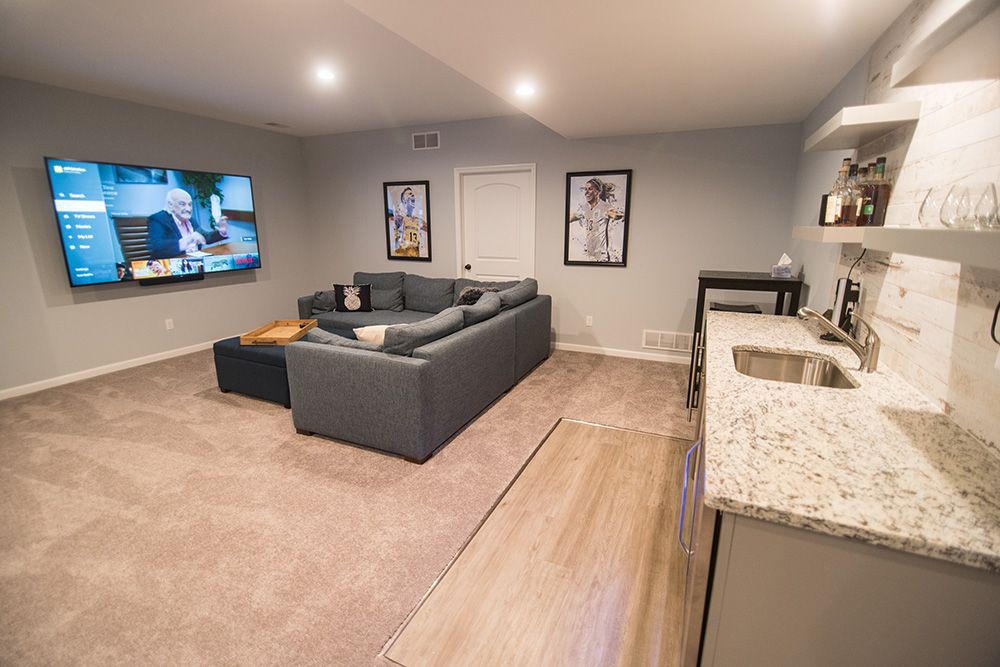
For many homeowners, the basement represents the largest undeveloped territory in their home. Far too often, this expansive space beneath our feet becomes a dark repository for forgotten holiday decorations, excess storage boxes, and disused exercise equipment. However, viewing your basement through the lens of modern home design reveals a blank canvas bursting with architectural potential. Basement finishing is widely regarded as one of the most cost-effective and versatile home improvement projects available. By converting an underutilized lower level into a vibrant, fully functional living quarter, you not only expand your home’s usable footprint but also significantly enhance its overall market value and day-to-day lifestyle quality.
Understanding the Difference: Finishing vs. Remodeling
Before diving into design plans, it is important to clarify what basement finishing actually entails. While terms like “basement remodeling” and “basement finishing” are often used interchangeably, they refer to two distinct levels of construction work:
- Basement Finishing:

 Are you ready to tackle that rest room renovation you’ve been pushing aside? Before you pick up the cellphone and rent a contractor , why not save some money and check out your hand at it. Considering the price of renovations for householders, DIY has gained recognition. The following list, created by Construction Management , contains a hundred of the highest DIY websites to assist information your home improvement tasks, in no particular order. We arrived at this list by means of our personal research, and for the good thing about our readers. The list is organized by space of the home including; General Remodeling, Interior Decorating, Kitchen and Bathroom, Office and Workspaces, Landscaping and Exterior, Basement, Storage, and Closets.
 Thomas has laid relatively low in recent years; Veronica Mars, 8 Simple Rules and Smallville make up his latest TV credit.
 Cast iron fireplaces are made from materials which can be one of the strongest and sturdiest in the market. It is often described as a means to warm up the house. Fire pits had been historically made of brick and mortar supplies. In the old days when individuals used to prepare dinner meals over the fireside, they did not worry about added accessories. Decorations like the fireside door or the fireside display weren’t that popular yet. However, many people began to see the construction as greater than just a place for cooking and warming up the place. The English created the styles based mostly on the Victorian image of designing household furniture and tools with the metal.