

For many homeowners, the basement represents the largest undeveloped territory in their home. Far too often, this expansive space beneath our feet becomes a dark repository for forgotten holiday decorations, excess storage boxes, and disused exercise equipment. However, viewing your basement through the lens of modern home design reveals a blank canvas bursting with architectural potential. Basement finishing is widely regarded as one of the most cost-effective and versatile home improvement projects available. By converting an underutilized lower level into a vibrant, fully functional living quarter, you not only expand your home’s usable footprint but also significantly enhance its overall market value and day-to-day lifestyle quality.
Understanding the Difference: Finishing vs. Remodeling
Before diving into design plans, it is important to clarify what basement finishing actually entails. While terms like “basement remodeling” and “basement finishing” are often used interchangeably, they refer to two distinct levels of construction work:
- Basement Finishing: This process takes an unfinished, raw space—characterized by bare concrete floors, exposed foundation walls, uncovered ceiling joists, and visible utility lines—and transforms it into a fully habitable room. It involves moisture proofing, framing, insulation, electrical rough-ins, drywall installation, flooring, and decorative trim work.
- Basement Remodeling: This involves altering or updating a space that has already been finished previously. Remodeling typically includes changing room layouts, upgrading existing finishes, or repurposing an existing finished basement room into a different function.
Critical Pre-Finishing Requirements
Unlike above-ground living areas, basements sit directly below grade and are surrounded by soil. This unique positioning makes pre-construction planning and moisture management vital to the success and longevity of any finishing project.
1. Rigorous Moisture and Water Management
Water is the single greatest threat to a finished basement. Before installing framing or insulation, the space must be completely dry and secure against moisture infiltration.
- Inspect foundation walls for cracks, efflorescence (white mineral deposits), or water stains.
- Ensure exterior grading slopes away from the foundation and that gutters and downspouts direct rainwater at least six feet away from the home.
- Consider installing an interior perimeter drain system and a reliable sump pump with a battery backup to protect your investment against heavy storms.
2. Ceiling Height and Building Codes
Building codes mandate specific minimum ceiling heights for habitable spaces, typically requiring at least seven feet of clearance. Keep in mind that adding subflooring, drywall, or suspended ceiling grids, along with boxing in ductwork and plumbing pipes, will slightly reduce the available vertical space.
3. Emergency Egress Compliance
Safety is paramount in subterranean living quarters. Building codes strictly require a secondary egress point—such as an egress window with a window well or a walk-out door—if the finished basement includes a bedroom or designated living area. This ensures occupants can safely exit in an emergency and provides rescue personnel with access.
Popular Functional Design Ideas
The absence of internal load-bearing walls in many basement layouts allows for exceptional design freedom. When planning your layout, consider how the new space can best serve your family’s evolving needs:
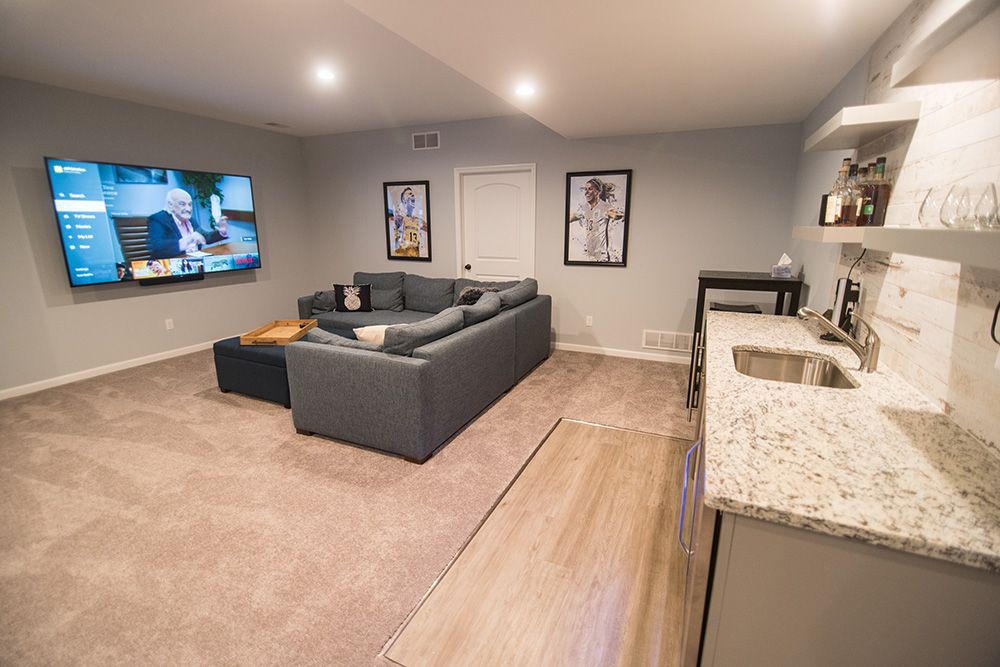
- The Ultimate Entertainment and Media Room: Because basements naturally feature limited sunlight, they provide an ideal home theater setting. Without glaring windows, you can install large projection screens, plush seating, and custom ambient lighting to create a cinematic retreat.
- In-Law or Guest Suite: Equipped with a private bedroom, a full bathroom, and a small kitchenette or wet bar, a finished basement offers comfortable, secluded accommodations for visiting family members or live-in guests.
- Home Gym and Wellness Space: Moving fitness equipment out of bedrooms and garages into a climate-controlled basement gym creates a dedicated, convenient environment for personal health and exercise routines.
- Dedicated Home Office or Studio: A lower-level workspace provides physical separation from the bustling noise of the main floor, creating a quiet environment conducive to productivity and focus.
Essential Material Choices for Lower-Level Environments
Selecting the right building materials ensures your finished basement remains comfortable, durable, and healthy over time. Traditional materials suited for upper levels may not perform well underground due to ambient humidity levels.
- Moisture-Resistant Drywall: Utilize mold- and moisture-resistant drywall boards (often referred to as greenboard or purpleboard) throughout the basement, especially around perimeter walls and plumbing zones.
- Subflooring and Flooring Options: Avoid installing solid hardwood flooring directly over concrete slabs, as natural wood expands and contracts with moisture changes. Instead, opt for engineered hardwood, luxury vinyl plank (LVP), or ceramic tile laid over a thermal subfloor barrier. LVP is particularly popular due to its complete waterproof nature, realistic wood aesthetics, and comfortable feel underfoot.
- Closed-Cell Spray Foam Insulation: Applying spray foam insulation directly to foundation walls creates a continuous vapor barrier, prevents condensation build-up, and delivers superior thermal efficiency.
Conclusion
Finishing a basement is a strategic home improvement project that bridges the gap between raw square footage and refined living comfort. By addressing foundational moisture control, adhering to local building codes, and selecting high-performance materials suited for below-grade spaces, you can create a safe, warm, and stylish lower level. Whether designed as an entertainment hub, a productive home office, or an independent guest suite, a finished basement transforms unused potential into lasting daily enjoyment while adding significant long-term value to your property.